The justice system is one of the most important institutions of a state. It protects rights, resolves disputes, and ensures that laws are applied fairly. However, traditional legal systems can face challenges such as delays, complicated procedures, high costs, and difficulties in accessing court information. In the modern age, technology provides an opportunity to address some of these problems. Digital justice can make legal services faster, more accessible, and more transparent, but it also creates new challenges that must be carefully managed.
What Is Digital Justice?
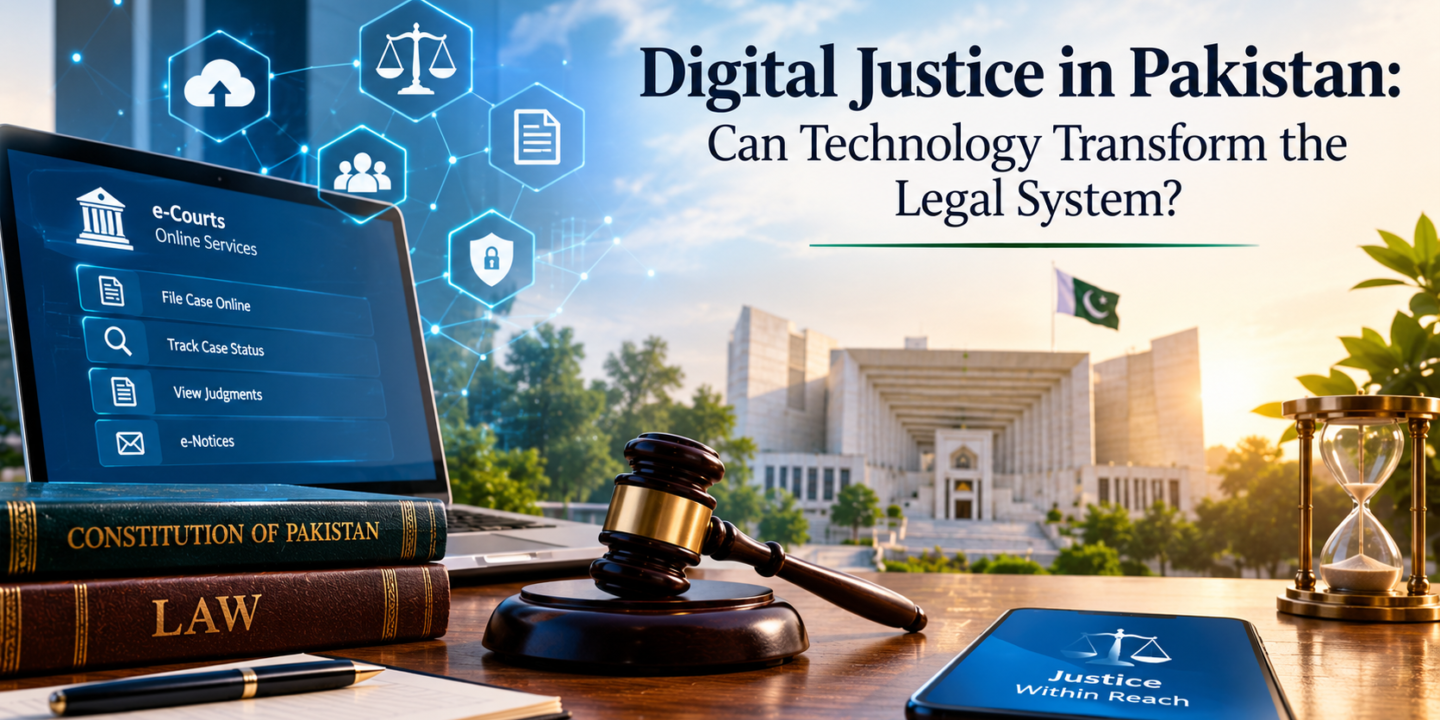
Digital justice refers to the use of technology in the administration and delivery of justice. It may include electronic filing of cases, digital court records, online access to judgments, virtual hearings, electronic notices, online case tracking, and technology-assisted legal research.
The purpose is not to replace judges or lawyers with technology. Rather, technology should assist legal institutions and make the justice system more efficient and accessible.
Why Does Pakistan Need Digital Justice?
For many citizens, approaching a court can be difficult. A person may have to travel long distances, repeatedly visit court offices, wait for case proceedings, and deal with extensive paperwork. These difficulties can become particularly serious for people living in remote areas or those who cannot easily afford repeated travel and legal expenses.
Digital systems can reduce some of these difficulties. If court information, case dates, documents, and judgments are available online, citizens and lawyers can access important information without physically visiting court offices for every matter.
Reducing Delay Through Technology
One of the major concerns in any justice system is delay. Technology cannot solve every reason for delay, but effective digital case-management systems can help courts organize files, monitor case progress, schedule hearings, and reduce unnecessary paperwork.
Electronic records can also make it easier to locate documents and share information between authorized court officials. Better organization can contribute to a more efficient judicial process.
Improving Transparency
Transparency is essential for public confidence in the justice system. Digital publication of judgments, cause lists, case information, and other appropriate court records can help citizens understand how the legal system operates.
When information is easily available, there is less dependence on informal sources of information. This can improve accountability and public confidence while also helping lawyers prepare their cases more effectively.
Access to Justice for Remote Communities
Pakistan has large rural and geographically remote populations. Physical distance can become a significant barrier to accessing legal institutions.
Technology can help reduce this gap through online legal information, digital filing systems, virtual consultations, and, where legally and technically appropriate, remote hearings. However, digital justice must be designed carefully so that people without reliable internet access are not excluded.
The Digital Divide
The greatest challenge of digital justice is the digital divide. Not every citizen has a smartphone, computer, reliable internet connection, or sufficient digital literacy.
If courts become completely dependent on online systems without providing alternatives, disadvantaged citizens could face a new form of exclusion. Therefore, digital transformation should complement physical legal services rather than immediately eliminate them.
Public facilitation centers, legal-aid services, and accessible court offices can help ensure that technology benefits everyone.
Privacy and Cybersecurity
Digital court records contain sensitive personal and legal information. Unauthorized access, data breaches, identity theft, and cyberattacks could seriously damage individuals and institutions.
Strong cybersecurity measures are therefore essential. Access to confidential information should be controlled, digital systems should be regularly secured, and clear rules should govern the collection, storage, sharing, and protection of legal data.
Artificial Intelligence and the Legal System
Artificial intelligence may also play a role in the future of legal services. AI tools can assist with legal research, document organization, summarization, and other administrative tasks.
However, AI should not be treated as a substitute for judicial independence or human legal judgment. Legal decisions involve facts, evidence, constitutional principles, fairness, and human circumstances. Automated systems can also produce errors or reflect biases present in their underlying data.
Therefore, AI in the justice system should remain subject to human oversight, transparency, accountability, and appropriate legal safeguards.
What Should Pakistan Do?
Pakistan can strengthen digital justice through a gradual and inclusive approach. Courts should continue improving electronic case-management systems and digital records. Lawyers and court staff should receive appropriate technological training. Citizens should be provided with simple guidance about using online legal services.
At the same time, cybersecurity and data protection should receive serious attention. Digital systems should be accessible to persons with disabilities and people with limited technological skills. Most importantly, physical access to justice should remain available for those who cannot use digital services.
Conclusion
Digital technology has the potential to transform Pakistan’s justice system by improving efficiency, transparency, communication, and access to legal information. However, technology is only a tool. True justice requires independent institutions, competent legal professionals, fair procedures, protection of fundamental rights, and equal treatment under the law.