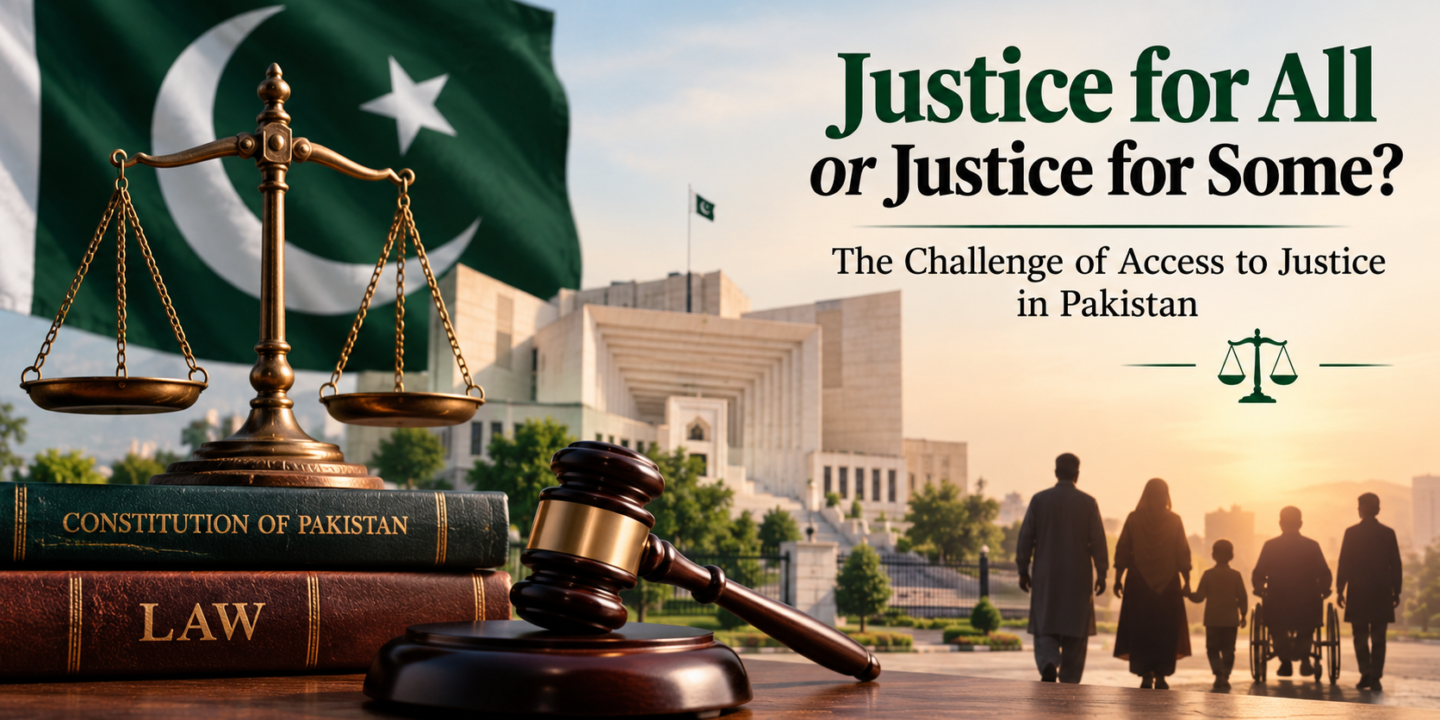
Access to justice is one of the most important foundations of a democratic and lawful society. Justice should not be available only to people who have money, influence, or strong connections. Every citizen should have a fair opportunity to approach the courts, understand their legal rights, obtain legal assistance, and receive a timely and impartial decision. In Pakistan, the Constitution recognizes fundamental rights and provides a framework for an independent judiciary, but many ordinary citizens still face significant barriers when seeking justice.
Meaning of Access to Justice
Access to justice means that every person should be able to use the legal system to protect their rights and resolve disputes. It includes more than simply having courts. A person must also be able to afford legal representation, understand the procedure, present their case effectively, and obtain a decision within a reasonable period.
The principle is closely connected with the rule of law. If laws exist but people cannot practically enforce their rights, the protection provided by those laws becomes weak. Therefore, an effective justice system must be accessible, affordable, understandable, and fair.
Constitutional Protection
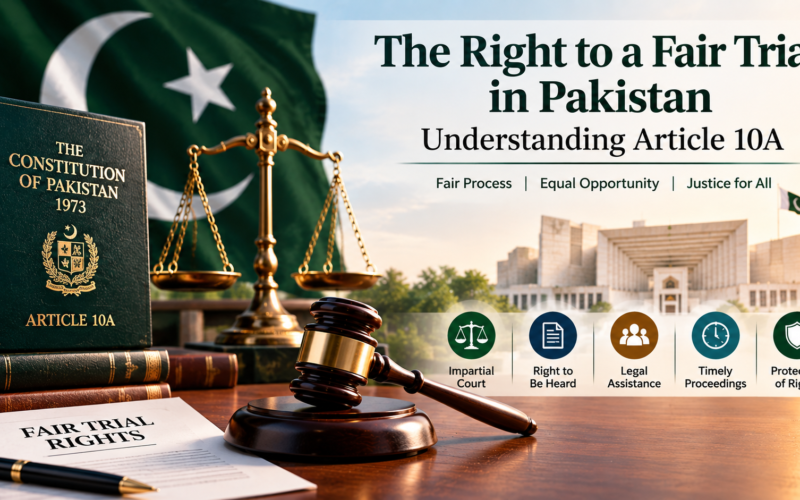
The Constitution of Pakistan provides important safeguards for citizens. Fundamental rights include the protection of life and liberty, dignity, equality before law, and safeguards relating to fair treatment. Article 4 emphasizes the right of individuals to be dealt with in accordance with law, while Article 10A recognizes the right to a fair trial and due process.
These constitutional guarantees demonstrate that access to justice is not merely a social expectation; it is closely connected with the legal and constitutional framework of Pakistan.
Major Barriers to Justice
One of the biggest challenges is the delay in disposal of cases. When cases remain pending for years, justice may lose its practical value. Delays can create financial and emotional difficulties for litigants and may discourage people from pursuing legitimate claims.
Another major barrier is the cost of litigation. Court fees, lawyer’s fees, transportation expenses, documentation, and repeated appearances can be difficult for low-income citizens. A legal right becomes difficult to exercise when a person cannot afford the process required to enforce it.
Lack of legal awareness is another important problem. Many people, particularly in rural and disadvantaged communities, do not know what legal rights they possess or where they can seek help. Some people may accept injustice simply because they are unaware of the legal remedies available to them.
There are also procedural and institutional difficulties. Complicated legal procedures, shortage of resources, inadequate infrastructure, and limited access to legal assistance can make the justice system difficult for ordinary citizens to navigate.
Role of Legal Aid
Legal aid can play a crucial role in making justice accessible to people who cannot afford a lawyer. A person should not be denied an opportunity to defend their rights simply because of poverty.
Government institutions, bar associations, universities, civil society organizations, and legal-aid organizations can contribute by providing free or affordable legal assistance. Legal awareness programs can also educate citizens about basic rights, available remedies, and the correct procedures for approaching courts and relevant authorities.
Improving the Justice System
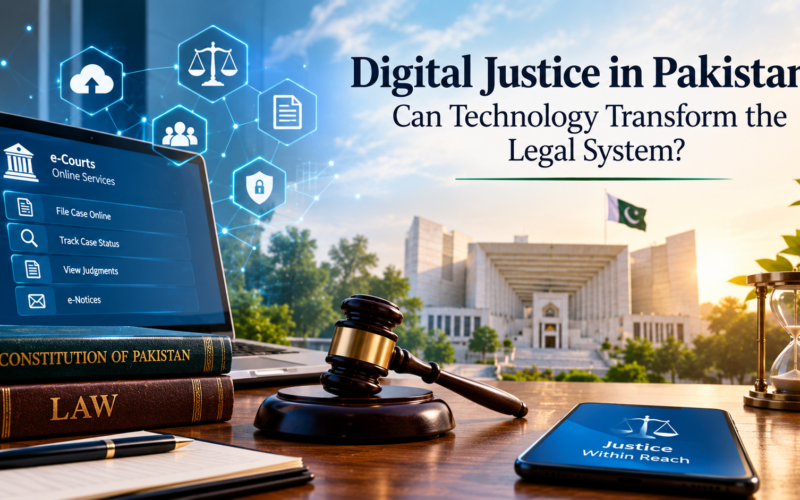
Pakistan can improve access to justice through several practical measures. Courts should continue working toward reducing unnecessary delays and improving case management. Greater use of appropriate technology can make filing, scheduling, record management, and access to judgments more efficient.
Alternative dispute resolution can also help resolve suitable disputes without lengthy litigation. Mediation and other lawful dispute-resolution mechanisms may reduce the burden on courts while allowing parties to reach mutually acceptable solutions.
Legal education and public awareness should receive greater attention. Universities, schools, media organizations, and legal institutions can help people understand basic legal rights and responsibilities.
Most importantly, justice must remain independent and impartial. Public confidence in the legal system depends on the belief that the law applies equally to everyone, regardless of wealth, status, political influence, or social background.
Conclusion
The real strength of the rule of law is measured not only by the existence of laws and courts but by whether ordinary people can actually use them. Pakistan has constitutional guarantees designed to protect fundamental rights and fair treatment, but barriers such as delay, cost, lack of awareness, and procedural difficulties continue to affect access to justice.
Justice should not be a privilege reserved for those who can afford it. A stronger system of legal aid, efficient courts, public legal education, appropriate use of technology, and effective alternative dispute resolution can help make justice more accessible. Ultimately, justice for all requires not only good laws, but also a legal system that people can realistically reach, understand, and trust.