How to Register a Nikah Nama in Pakistan (2026 Guide)
Introduction
A properly registered Nikah Nama is an important legal record of a Muslim marriage in Pakistan. Marriage registration is required under the Muslim Family Laws Ordinance, 1961 (MFLO).
The registered marriage record may be needed for matters such as obtaining a computerized Marriage Registration Certificate, updating NADRA family records, visa and immigration applications, inheritance matters, maintenance claims, custody proceedings and divorce-related proceedings.
This guide explains how a Muslim marriage is registered, what documents are normally required, what online facilities may be available, and what steps can be taken when there is a mistake or disputed entry in a Nikah Nama.
Part 1: How to Register a Nikah Nama
Is Nikah Registration Compulsory in Pakistan?
Yes. Under Section 5 of the Muslim Family Laws Ordinance, 1961, every Muslim marriage solemnized under Muslim law must be registered according to the Ordinance.
The Union Council grants licences to persons known as Nikah Registrars. If a marriage is solemnized by a person other than the Nikah Registrar, that person must report the marriage to the relevant Nikah Registrar for registration.
Step 1: Perform the Nikah Through the Proper Process
The Nikah may be solemnized by a person authorized to conduct the religious ceremony. However, the marriage must subsequently be registered through the licensed Nikah Registrar having the relevant jurisdiction.
It is therefore important to distinguish between solemnization of the Nikah and legal registration of the marriage.
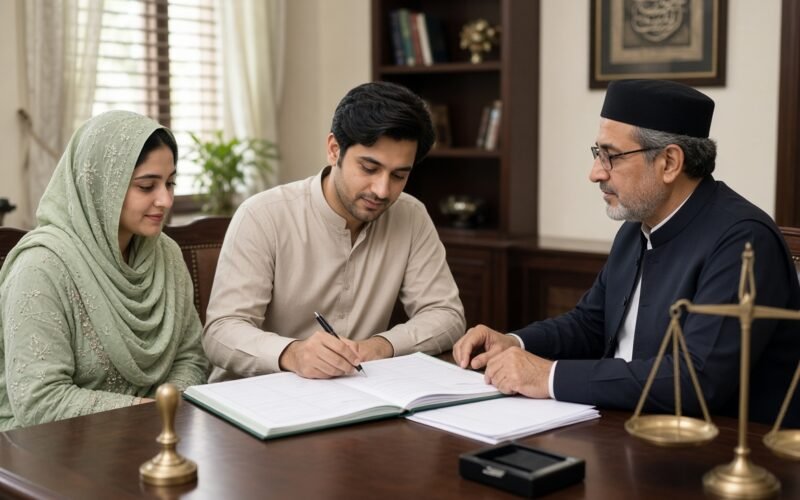
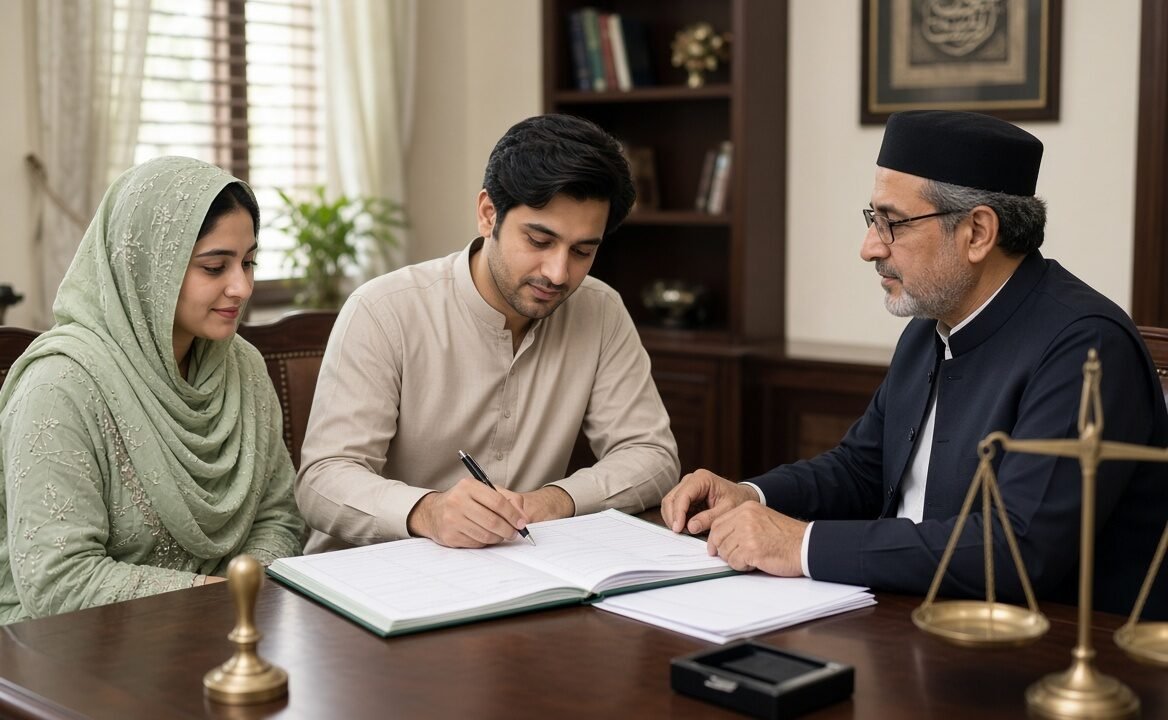
Step 2: Complete the Nikah Nama
The prescribed Nikah Nama contains important information about the marriage and the parties.
Particular attention should be given to:
- Full names and particulars of the bride and groom;
- CNIC numbers;
- Date and place of marriage;
- Names and particulars of witnesses;
- Haq Mehr (Dower) and whether it is prompt or deferred;
- Special conditions agreed between the parties;
- Delegation of the right of divorce, where applicable;
- Information concerning any existing marriage of the husband and the legal requirements relating to another marriage; and
- Signatures and thumb impressions of the persons required by the prescribed form.
Important: Read every column carefully before signing. Do not leave important terms blank or sign a document containing information that you have not checked.
Step 3: Registration With the Nikah Registrar / Union Council
The Nikah Registrar records the marriage in the prescribed register and deals with the copies required under the applicable rules.
The West Pakistan Rules under the Muslim Family Laws Ordinance provide for the Nikah Nama to be prepared in multiple copies, with copies supplied to the bride and bridegroom and another copy forwarded to the Union Council.
Where the marriage is solemnized by someone other than the Nikah Registrar, the person solemnizing the marriage is required to deliver the prescribed form and registration fee to the relevant Nikah Registrar as expeditiously as possible.
Step 4: Obtain Your Registered Copy
After registration, the spouses should keep their copies of the registered Nikah Nama safely.
It is advisable to obtain certified copies where required for official, immigration, court or other legal purposes.
Step 5: Obtain the Computerized Marriage Registration Certificate
After the marriage has been registered, the concerned local government authority may issue a Computerized Marriage Registration Certificate according to the applicable provincial procedure.
For example, Punjab Local Government guidance states that an application for the computerized Marriage Registration Certificate is submitted to the concerned Union Council or Municipal Committee together with a copy of the registered Nikah Nama and CNICs of the husband and wife. The current Punjab guidance lists approximately three working days and a Rs. 300 certificate fee. Applicants should verify the latest fee and procedure with their concerned UC/MC because administrative requirements can change.
Is Online Nikah Nama Registration Possible in Pakistan?
The answer depends on what is meant by “online registration.”
The legal registration of a new Muslim marriage still operates through the prescribed registration system and the relevant Nikah Registrar/Union Council. Digital services can assist with applications, civil-registration services, tracking and obtaining certain documents, but the availability of a completely online process varies according to the relevant authority and location.
NADRA currently provides digital and provincial civil-registration services through its systems, including marriage registration services in its listed service framework.
Therefore, applicants should check the current facility available through their relevant Union Council, Municipal Committee, provincial local-government portal or NADRA service before assuming that the entire registration process can be completed online.
Documents Usually Required
Requirements can vary by locality, but applicants may commonly be asked for:
- Original CNICs of the bride and groom;
- Copies of the CNICs of the bride and groom;
- CNIC copies of witnesses, where required;
- Prescribed Nikah Nama;
- Photographs, where required by the relevant authority;
- Divorce certificate or death certificate of a previous spouse, where applicable; and
- Other documents requested by the relevant Union Council, Municipal Committee or registration authority.
Part 2: How to Correct Mistakes in a Nikah Nama
Mistakes in a Nikah Nama can include spelling errors, incorrect CNIC numbers, wrong dates, incorrect dower information or other inaccurate entries.
The appropriate procedure depends on whether the mistake is a genuine clerical or record error or whether the requested change would alter a substantive term of the marriage.
A. Clerical or Minor Errors
If there is an obvious clerical error, the first step is generally to approach the relevant Union Council / Municipal Committee or Nikah Registrar where the marriage record is maintained.
The applicant may be required to:
- Submit a written application explaining the error;
- Provide the original or certified copy of the Nikah Nama;
- Provide CNICs of the spouses;
- Provide documentary evidence showing the correct information; and
- Submit an affidavit or other supporting document if required by the relevant authority.
The authority can examine the original record and determine whether the requested correction falls within its administrative powers.
B. Substantive or Disputed Changes
A request to change a substantive term of a marriage is different from correcting a simple spelling or typographical error.
For example, if one party claims that the recorded amount of Haq Mehr is wrong while the other party disputes the proposed correction, the matter may require adjudication rather than a simple administrative correction.
Similarly, an attempt to add a condition that was allegedly agreed orally but was not recorded in the Nikah Nama may involve a disputed factual or legal question.
In such circumstances, the appropriate court or legal forum may need to be approached, depending on the nature of the dispute and the relief being sought.
What Documents May Be Needed for a Correction?
- Original or certified copy of the Nikah Nama;
- CNICs of both spouses;
- Documentary evidence supporting the requested correction;
- Application addressed to the relevant Union Council / Municipal Committee;
- Affidavit, where required; and
- Court order or decree where the correction requires judicial determination.
Important Practical Tips
- Read every column before signing: Do not sign a blank or incomplete Nikah Nama.
- Check CNIC numbers carefully: A single incorrect digit can create problems later.
- Check the Haq Mehr: Make sure the amount and payment terms are accurately recorded.
- Review special conditions: If the parties have agreed to special conditions, make sure they are properly recorded in the prescribed form.
- Keep certified copies: Both spouses should preserve copies of the registered Nikah Nama.
- Update NADRA records: After marriage registration, ensure that the relevant marital/family information is properly reflected in NADRA records.
- Do not alter the original document yourself: Never erase, overwrite or manually modify an official Nikah Nama.
- Act promptly when an error is discovered: Early correction can make record verification easier, although there is no universal rule that every correction must be requested within a particular number of months.
Frequently Asked Questions
Is an unregistered Nikah valid?
Registration is legally compulsory under Section 5 of the Muslim Family Laws Ordinance, 1961. Questions concerning the religious validity of a Nikah and the legal consequences of non-registration are distinct issues. Even where a marriage has been solemnized, failure to properly register it can create serious evidentiary and legal problems.
Can I register a Nikah that took place years ago?
A delayed registration may be possible, but the procedure and supporting evidence can depend on the circumstances and the applicable local procedure. The parties should approach the relevant Nikah Registrar/Union Council and provide evidence of the marriage.
Who can correct a Nikah Nama?
For an apparent clerical or record error, the relevant Nikah Registrar or Union Council/competent local authority should be approached first. If the requested change is substantive or disputed, a court order may be required.
Does correcting a clerical error invalidate the Nikah?
A genuine clerical correction does not by itself invalidate a marriage. However, where the correction concerns a disputed substantive term, the legal consequences depend on the facts and the decision of the competent authority or court.
Can I get a Marriage Registration Certificate without a registered Nikah Nama?
Normally, the computerized Marriage Registration Certificate is based on the underlying registered marriage record. Punjab Local Government guidance specifically requires a copy of the Nikah Nama duly registered by the Nikah Registrar for issuance of the computerized certificate.
Conclusion
Registration of a Muslim marriage is a legal requirement in Pakistan. The Nikah Nama is an important record containing the parties’ identity details, dower and other marriage-related terms.
Couples should carefully check the Nikah Nama before signing it and keep certified copies after registration. If an error is discovered, genuine clerical mistakes should first be taken to the relevant registration authority, while substantive or disputed changes may require judicial intervention.
Because procedures can differ between provinces and local authorities, applicants should confirm the current requirements with the relevant Union Council, Municipal Committee or other competent authority.
Need Legal Assistance?
If you need assistance with Nikah registration, obtaining a certified copy, computerized Marriage Registration Certificate, or dealing with an error in a Nikah Nama, Justify.pk can help you understand the relevant legal and administrative process.
Disclaimer: This article is for general legal information and does not constitute legal advice. Registration procedures, documentary requirements and available remedies may vary according to the province, local authority and circumstances of the case.